IVM Summer Research Program


With support from faculty mentors, students develop their own international research projects and either apply for competitive grant funding or self-fund. This popular program has been a key part of the IVM curriculum since it began in 1982. To date, hundreds of students have successfully carried out research worldwide.
Opportunities for students to plan their research begin in the first year. Through IVM Forums, students are introduced to various areas of IVM. There, they begin to connect with students who have conducted Summer Research, as well as professionals in the field.
In the fall semester, first-year students take Veterinarians, Animals and Society (VMED-138), which broadens their understanding of IVM and begins to refine their area of interest or specialization.
Students continue attending the IVM Forums, which further prepare students to plan their research and compete for funding.
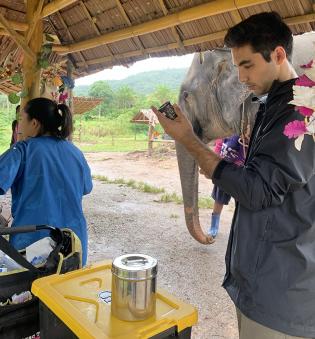
From there, students work with faculty mentors who help them focus their objectives, connect with research opportunities in the field, and develop a funding strategy. Students spend months preparing for their research trip, a process that includes:
- Developing scientific and technical expertise
- Researching cultural and social norms of the host country
- Performing other preparations particular to the project

After completing their Summer Research, students are encouraged to prepare and submit a paper for peer review and publication. Additionally, they present their research at the Annual Research Presentation Day and during an IVM Forum. These opportunities give students a chance to develop presentation and reporting skills that are useful beyond research and may be transferable to a greater professional skill-set.
The Summer Research Program is an intense academic and often personal experience. For many students, this program is a highlight of their time at veterinary school, and for some, a turning point in their developing career.