Tufts Theriogenology Club and Student Livestock Organization Bovine Breeding Lab
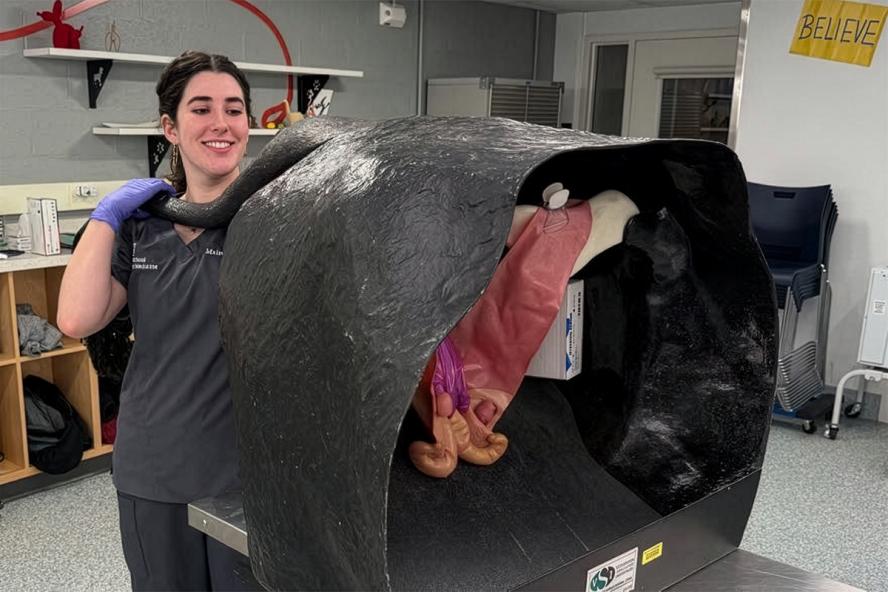
Over MLK weekend, the Tufts Student Chapter for the Society For Theriogenology (Therio Club) and the Student Livestock Organization (SLO) hosted two hands-on labs related to bovine artificial insemination (AI). Artificial insemination is a common procedure performed by veterinarians in many different species. In the dairy industry, AI has become the primary method for breeding cows because it reduces the risk of disease transmission and physical trauma, enables farmers to use semen from valuable bulls across the country, and helps synchronize calving for improved management of calves and herds.
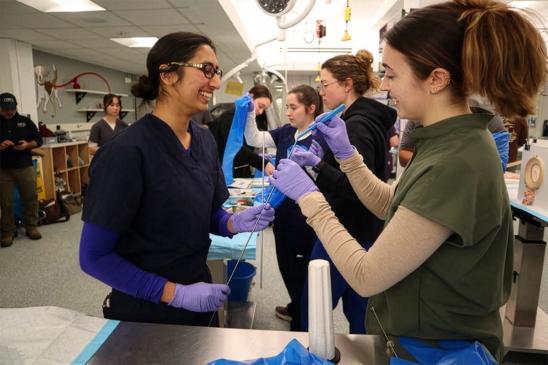
On that Friday, 24 D.V.M. students participated in a wet lab in the Joseph Kelley, D.V.M. Simulation Laboratory, where they were able to practice proper semen handling, loading the AI rod, and were instructed on how to navigate the cervix with the AI rod while simultaneously rectally palpating using innovative models of bovine anatomy from the Kelley Sim Lab. Tufts Veterinary Field Service’s (TVFS) Rachel Gately, D.V.M., faculty advisor for Therio Club, David Hernke, D.V.M., V08, and Eugene White, D.V.M., DABVP, worked with students to practice these skills.
Following Friday’s lab, 16 second- and third-year D.V.M. students transitioned to the bovine barn Saturday morning to practice their skills on live heifers. Students paired up and took turns artificially inseminating the heifers under the supervision of a doctor from the TVFS, including Dr. Hernke, Dr. Gately, Adam Ward, D.V.M., Isabelle Louge, D.V.M., and Cummings School farm manager Jay Lane.
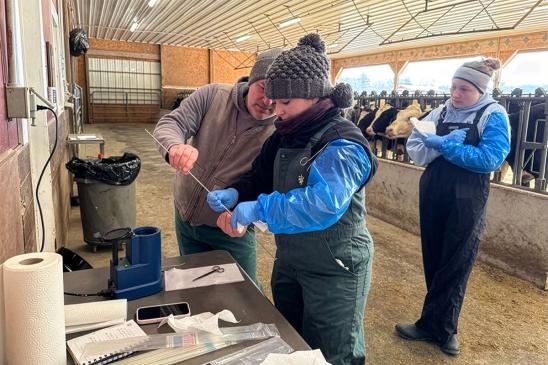
Both events were very well received by students. There was a large demand from students for these events and a waitlist. The goal is to offer Bovine AI labs at least twice a year, so that all interested students can have the opportunity to attend. In 40 days, faculty members from TVFS will use ultrasonography to determine if the heifers are pregnant and if the breedings were successful. The students who participated in both labs will have the opportunity to observe the ultrasound procedures to see if the cows they inseminated are pregnant. Later in the spring, first-year D.V.M. students will have the opportunity to practice diagnosing pregnancy in cattle via rectal palpation in their Clinical Skills course.