How to Help a Baby Bird When You Find One on the Ground
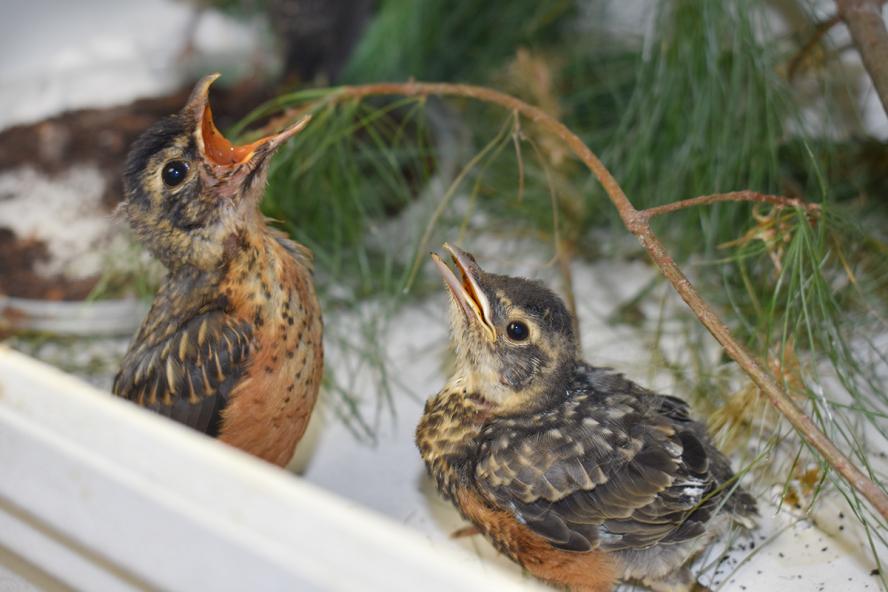
How do I care for baby birds found this spring?
Finding a baby bird on the ground is a common occurrence in spring and summer, often leading to panic and uncertainty. The most common questions revolve around determining whether the bird is in danger, identifying its age, and whether human intervention will do more harm than good. Unfortunately, well-intentioned attempts to “save” a baby bird can be more harmful than one would think. Determining when one should act, and what action one should take, if any, is critical for the best chance of survival for the bird.
I found a baby bird on the ground…what do I do?
The first thing you will need to do is determine the age of that baby bird and its stage of development at the time. Basically, is it a hatchling, a nestling, or a fledgling? Determining the best next steps:
- A hatchling is a newborn baby between 0 and 4 days old; its eyes are closed, it has little to no feathers, and it is extremely small, depending on the species.
- A nestling is usually 3-13 days old, eyes are open(usually between 3-5 days old), has a few feathers, usually some fluffy down feathers, and tubelike sheaths.
- A fledgling is a baby bird that is 13–14 days old or older, is well feathered, has a short tail, can walk, flap its wings, and even flutter in the air for a bit. This bird is considered a teenager in this developmental phase. Most people will encounter a fledgling on the ground, and fledglings rarely need human intervention.
I have identified the age, what are the next steps?
If it is a nestling or a hatchling and is NOT injured, you should try to locate the nest. If you can locate the nest, return the bird to its nest, leave the area, and observe it from afar. If the nest is not accessible, or if a nest has fallen to the ground and the parents are still nearby, you can make a nest out of a basket, a plastic bin, a tissue box, or other container, line the makeshift nest with the original nesting material or some dried grass, and place the babies inside. Place the makeshift nest somewhere near its original site, on a tree, bush, or pole, where the parents can see it and continue feeding their young. Mom and Dad will care for it in the new nest as well as any young in the original nest. You should see the parents return to the nest every 20 minutes or so to care for the birds as normal. Be patient, as the parents can fly in quickly, and it is easy to miss them.
If it is a fledgling and NOT injured, it is meant to be on the ground for a few days, typically found alone, hopping and running around. This is a normal part of their development as they learn to fly and begin self-feeding. This is a critical, but extremely vulnerable time in their development. Please don't kidnap healthy fledglings. Don't worry, they are being tended to by their parents, who are nearby watching their baby. If the little bird appears to be content and you see adult birds in the area, it is best to assume the baby is being cared for. Observe the bird from afar.
Are there cats or other predators around or is the bird in immediate danger?
If possible, keep your pets indoors while the fledgling is on the ground. If this can’t be done, attempt to place the fledgling in a nearby bush or construct a makeshift nest as described above. If a bird is in immediate danger (for example, if it’s on a sidewalk or road), place it on top of a nearby shrub or bush and leave the area. Don’t attempt to feed the baby— its parents can do a much better job.
Will the parents abandon it if I touch it?
The adult birds WILL NOT abandon their babies if a human touches the babies. This is a myth, but please handle the bird as little as possible. Wearing gloves when handling wildlife is recommended; if not, wash your hands thoroughly after contact.
What if the parents do not return to care for the birds or if the nest cannot be found, and the bird is not injured?
- If no parents are around, it is getting dark or cold, babies should not be left overnight if the parents do not come back. Call Tufts Wildlife Clinic (508-839-7918) or a licensed wildlife rehabilitator for advice.
- Do not give food or water; it can easily drown them or cause death.
How do I tell if a bird is injured?
- It is usually clear when a bird is sick or injured and in need of urgent care. A bird is typically injured or sick when it appears quiet, dull, the eyes may be closed, and it has fluffed feathers (the bird looks “puffed up”). You may see blood, flies around it, an obvious wound, breathing problems, a drooping wing, or lameness or an inability to stand or hop normally.
- If the bird is a victim of a cat attack, it will need intervention as well. Even if injuries are not visible, they will need immediate help.
What should I do if the bird is injured?
- Protect yourself: Wear gloves. A net is very useful for capturing animals that will try to flee or fly.
- Prepare a container: A shoebox with air holes in the lid, lined with a small cloth or paper towel works for most songbirds.
- Put the bird in the box: Cover the bird with a light cloth, then gently place it in the box or crate.
- Keep it warm: If the bird is cold, put one end of the shoebox on a towel over a heating pad set on low. You can also warm up a water bottle and wrap it with a towel to provide warmth. Make sure the bottle is secure and will not roll onto the animal.
- If you can’t transport it immediately: Keep the bird in a warm, dark, quiet place.
- Do not give it food or water. Feeding an animal an incorrect diet can result in injury or death. Also, a captured animal will get food and water stuck in its fur/feathers, potentially leading to discomfort and hypothermia.
- Do not handle it. Leave the animal alone. Remember, human noise, touch and eye contact are very stressful to wild animals.
- Keep children and pets away from it.
- Transport the bird as soon as possible: During transport, keep the bird in the box or crate, keep the car quiet (radio off).
If the baby appears to be injured or sick, feel free to call the Tufts Wildlife Clinic at (508) 839-7918. To find more information about this and any other wildlife question, please visit Tufts Wildlife Clinic's website here.
Please note: The Wildlife Clinic does not take in healthy orphaned babies. Please get in touch with a wildlife rehabilitator. You can find a list of licensed wildlife rehabilitators in Massachusetts here.
It is always best for young animals to remain with their parents – please do all you can to keep the young bird safe and in or near its nest so that the parents can continue to care for it. Its parents do a much better job.
Whitney Stiehler is a Wildlife Clinic Program Administrator in Tufts Wildlife Clinic. For further information on Tufts Wildlife Clinic for our faculty and staff, please visit our website here.
Department:
Tufts Wildlife Clinic