New World Screwworm Q&A with Dr. Isabelle Louge
New World screwworm (NWS) is a parasitic fly that can feed on the tissues of warm-blooded animals and lay their eggs in open wounds or body openings, such as the nose, eyes, ears, and mouth. The flies are most often found in South America and parts of the Caribbean, but in the last few years have also moved into Central America and Mexico. NWS was eradicated in the United States about 60 years ago, but the U.S. Department of Agriculture (USDA) recently confirmed a case in a calf in Texas. Since then, a total of seven cases have been documented, including in a dog in New Mexico.
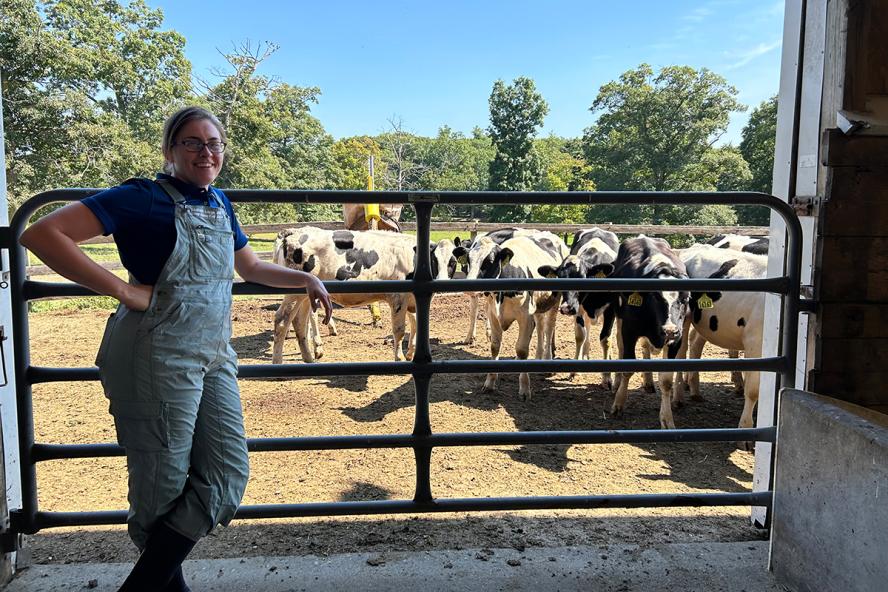
Dr. Isabelle Louge, clinician with Tufts Veterinary Field Service (TVFS) and assistant clinical professor in the Department of Large Animal Clinical Sciences at Cummings School of Veterinary Medicine at Tufts University, answers questions for animal owners about New World screwworm.
What are the risks of New World screwworm to livestock, pets, and other wildlife?
While many flies can produce fly larvae (maggots) that infect wounds, New World screwworm is particularly aggressive and can cause significant damage to the animal’s healthy, living tissue. Infection with NWS causes large, painful, invasive wounds that produce a terrible smell. Secondary infections and direct damage to tissue can put the animal’s life at risk.
What about my animals here in New England?
New England doesn’t have the conditions for New World screwworm, but if clients travel with animals south, especially Texas or New Mexico, they should take precautions. As always, it is important to get the required certificates of veterinary inspection when traveling interstate with any animal. This process ensures that a veterinarian assesses your animal before it travels, reducing the risk of disease crossing state lines, helping protect everyone. Before traveling, check state websites for alerts on recent disease outbreaks and avoid traveling to those areas. For current status and updates on New World screwworm incidents in the United States, please visit this USDA website.
How was NWS eradicated in the United States?
Historically, teams of cowboys used to be tasked with identifying and treating animals with screwworm infections, but the disease still led to production losses and deaths. The eradication effort hinged on the use of sterile male flies, which were bred in specialized facilities and released into the wild. The sterile males could not fertilize eggs but would mate with female flies. Female flies that mate with sterile male flies lay non-viable eggs that cannot hatch. The sterile male program was a success because of the collaboration between the United States and Central and Southern American countries where the sterile males are bred and released. NWS was considered eradicated from the United States in 1966. However, no system is perfect. There was an outbreak in Texas in 1972 where 90,000 incidents were recorded in cattle; in 2016-2017 in Florida, 135 Key deer, three dogs, two cats, a pig, and a raccoon were confirmed to have been afflicted with NSW; a quick eradication response using sterile flies was again successful. Currently, USDA is investing significantly to renovate existing and construct new facilities in the United States and Mexico to stop the spread of screwworm. These investments will expand sterile fly production and release capacity, strengthen surveillance and response preparedness.
How is NWS detected? What are the symptoms?
In the United States, NWS is detected by veterinarians who report the infection to the state which can confirm the infection through species identification techniques through the USDA’s National Veterinary Service Laboratory (NVSL). Any animal suspected of being infected with NWS should immediately be seen by a veterinarian. Any unexplained wounds or wounds that continue to enlarge on your animal should be evaluated by a veterinarian.
How is NWS treated?
If you suspect your animal is infected with NWS, you should schedule a visit with your veterinarian right away. There are medications and insecticides that have been given provisional approval to treat NWS. Your veterinarian can advise you on the best treatment plan for your animal. Generally, application of labeled topical insecticides around wounds and umbilical cords shortly after birth is a good way to reduce the risk of fly strike. This should be considered for wounds from routine procedures (like castration) and for injuries.
If NWS is detected, how should it be reported?
Any animal suspected of having NWS should be evaluated by a veterinarian. Your veterinarian will be able to contact the state and federal veterinary officials to report a potential NWS infection. For cases suspected in wildlife, report sightings directly to your local USDA Wildlife Services office. The USDA APHIS website has more detailed information on reporting suspected cases.
What movement control and eradication efforts is the USDA making today to keep NWS out of the United States?
Currently there are restrictions on the movement of animals in zones where NWS has been detected. Livestock trade at southern ports has also been halted at this time. In addition to the movement restrictions, sterile male flies are being released to help break the reproductive cycle of the flies. There is funding being applied to increase the capacity to produce sterile flies to help with the eradication effort.
NWS can be fatal to animals, but does it affect the food supply?
Thankfully, we have an extensive food safety program in the United States, which requires inspections of meat before it is sold commercially. No product suspected of being contaminated by NWS would be allowed to enter the food supply.
AVMA Resources
Looking for information about New World screwworm (NWS)?