Externing at Amici Cannis Animal Hospital in Ecuador
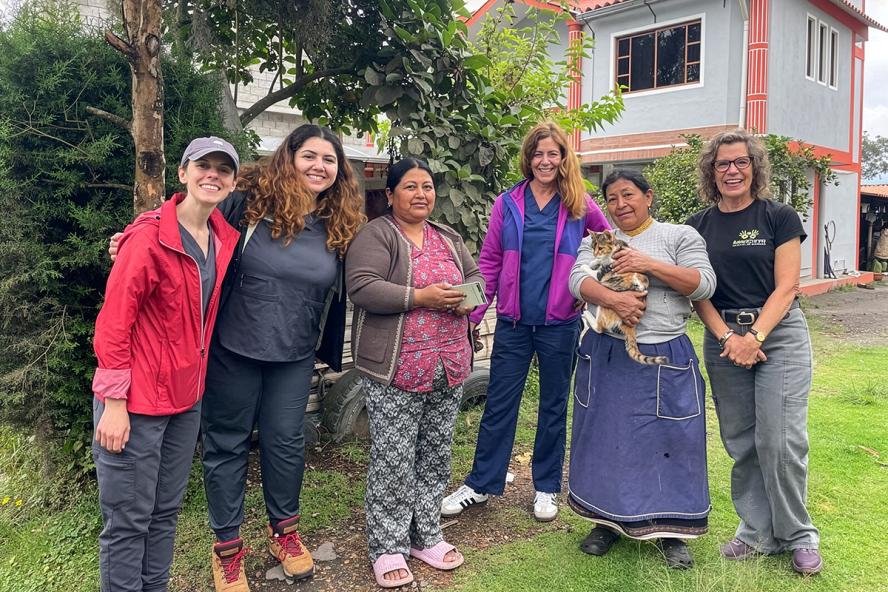
My two-week externship with Amici Cannis, a small animal hospital in Cotacachi, Ecuador, which provides free sterilization and veterinary care for street dogs, low-cost sterilization for pets of families in need, and high-quality veterinary care for the surrounding area, was, without exaggeration, one of the most rewarding experiences of my life. Not only did I receive valuable surgical training in spay/neuter that will serve me throughout my career, but I also participated in community medicine in a different culture, gaining perspective that has made a lasting impact on me and shaped my career goals.
During my time at Amici Cannis, I performed 25 surgeries over seven surgery days; of these, 16 were dog spays. I also performed two cat spays, two dog neuters, and five cat neuters. Prior to Amici Cannis, my surgical experience was during my clinical rotations at Tufts at Tech Community Veterinary Clinic and Luke and Lily Lerner Clinic. Through these, I had performed a total of four dog spays, six cat spays, and eight neuters. Amici Cannis increased my experience with dog spays by four times. In addition, my average time to complete a dog spay decreased from 2.5 hours to 1 hour, and my confidence increased significantly. I also gained experience spaying dogs that were in heat, postpartum, and pediatric, which improved my comfort level with handling delicate/friable tissues. This boost to my surgical confidence is hugely important as I approach graduation and head into my first job, where surgical competence will be expected.

Not only was the volume of surgeries helpful in increasing my confidence, but having an alumna mentor throughout the process was invaluable. Dr. Cara Kramer was an incredibly supportive mentor, lending guidance when I felt stuck, providing tips from her many years in clinical practice, and reassuring me whenever I doubted myself. She made sure I reflected on what went well each day and set small goals for ways to improve the following day. Having her there as a teacher and cheerleader augmented my learning and made the experience even more enjoyable.
Aside from the surgical experience, I also gained a unique perspective on community medicine through vaccination campaigns. Each Friday, we went out into local Indigenous communities, going door-to-door to provide free rabies vaccinations, deworming, and anti-parasitic treatments for dogs and cats. By interacting directly with the people of these communities, where the culture and way of life are significantly different from my own, I witnessed how the human-animal bond transcends language, culture, and socioeconomic status. Providing a public health service that these communities otherwise would not be able to access made me feel that I was making a tangible impact and fueled my desire to continue doing community medicine work, both at home and abroad. Furthermore, communicating with community members in Spanish gave me confidence in my ability to use my Spanish language skills in a professional context and was highly rewarding.
Department:
D.V.M. Program